

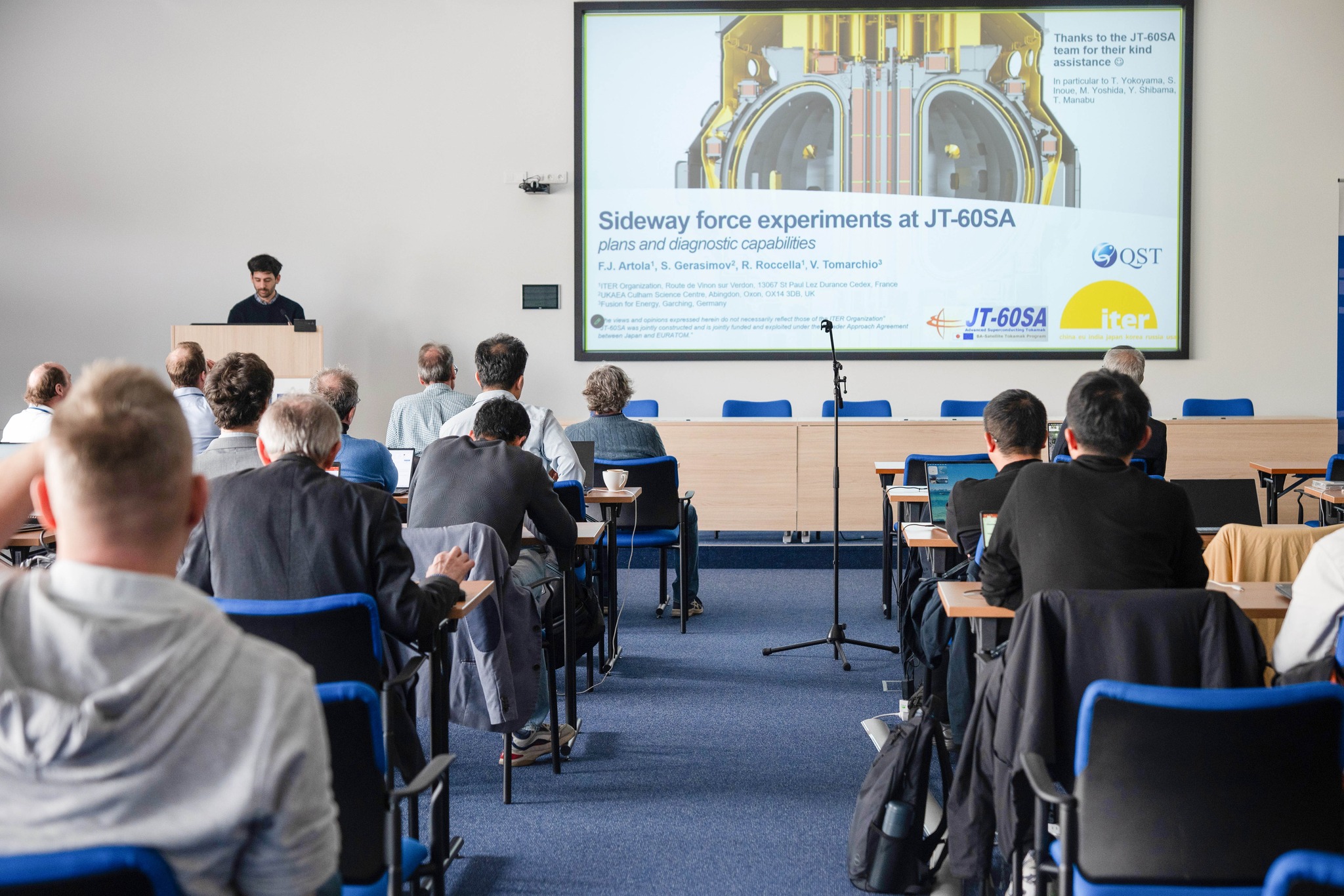
You may be surprised to know that while most Prague residents perceive the abbreviation “MHD” as urban public transport, for more than a hundred leading world experts it is magnetohydrodynamics - a key scientific field for the stability and safety of future fusion power plants.
It is the stability of plasma from the perspective of magnetohydrodynamics that is crucial for our common future. The MDC group is involved, among other things, in the development of plasma control systems and also for the so-called mitigation of disruptions.
Simply put: they develop technologies and algorithms that can safely control the plasma
discharge in milliseconds and protect the internal components of the reactor from damage even in
the event of sudden critical instabilities. Without this scientific precision, our vision of a
clean and inexhaustible source of energy would remain only a theory.
The meeting program was intensive - a total of 61 expert lectures were given in key areas of
research.
Disruptions and Mitigation:
Experts addressed the physics of fragmentation pellet injection (SPI, something like a
shotgun for hydrogen and noble gas ice), monitoring critical instabilities, and methods for safely
terminating the discharge.
Runaway Electrons:
A large part of the program was devoted to the creation, suppression, and modeling of these
relativistic electrons using passive coils, helicon waves, or material injection.
Active control of MHD instabilities:
Algorithms for real-time plasma stability control were discussed, in particular the control
of sawtooth instability and neoclassical tearing modes/magnetic islands (NTM).
Electromagnetic loads:
Participants analyzed the forces acting on the vacuum vessels of reactors (e.g. ITER, JET,
COMPASS) during disruptions and their effect on mechanical integrity.
Advanced Modeling and AI:
The program included presentations on the use of artificial intelligence for disruption
prediction and nonlinear MHD simulation using the JOREK code.
Experimental results from around the world:
New insights were presented from a number of tokamaks, including EAST, KSTAR, JET, MAST-U,
ASDEX Upgrade, DIII-D and HL-3, as well as our COMPASS tokamak
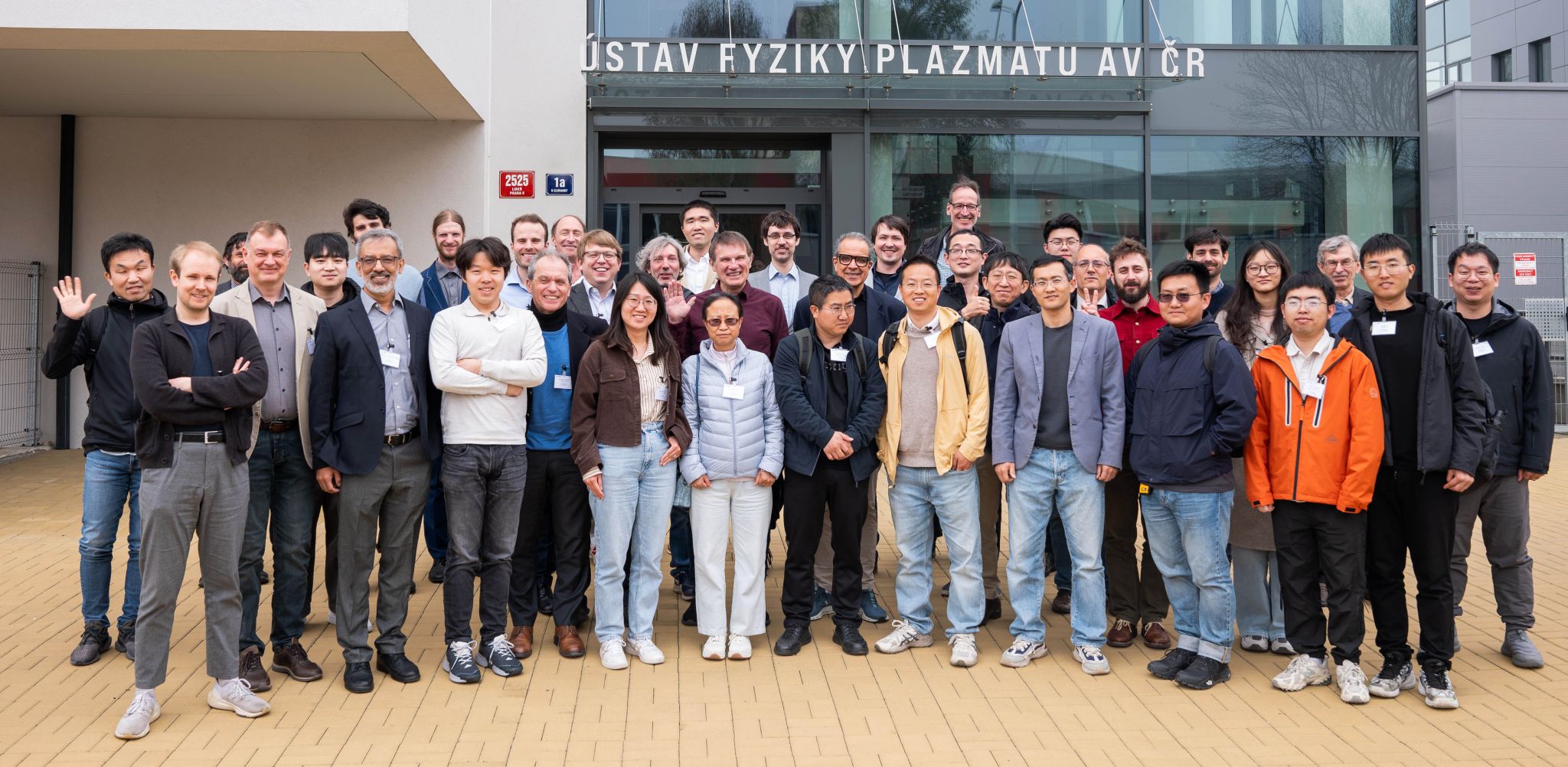
Photo:IPP.
12 May 2026


